Deka speed limiter is a device installed in vehicles to regulate and control their maximum speed. It is often used for safety reasons, to improve fuel efficiency, or to comply with legal speed limits. The mechanism and operation of Deka vehicle speed limiter can support for all electronic and mechanical throttle vehicles. Here’s a general overview of how a speed limiter typically works in vehicles:
Electronic Control Unit (ECU): Deka speed limiter devices usually have an ECU that controls the engine’s operations. The ECU receives input from various sensors, including the vehicle’s speed sensor.
Deka Speed Sensor: This sensor detects the vehicle’s current speed and sends the information to the ECU. It can be a mechanical or electronic sensor.
Set Speed: The driver or vehicle operator can set the desired speed limit by using Deka remote controller or PC config software. This speed is programmed into the ECU as the maximum allowed speed.
Control Signal: When the vehicle’s speed exceeds the set limit, the ECU sends a control signal to the engine management system.
Speed Limiter Device: In some vehicles, especially older ones, Deka speed limiter device may be a separate mechanical device rather than an electronic system. our devices can be a governor or a pneumatic governor that controls the throttle linkage or the fuel supply to limit the engine’s RPM and thus the vehicle’s speed.
Deka Speed limiters are often used in commercial vehicles, such as trucks and buses, to prevent accidents due to excessive speed. They can also be found in some passenger vehicles, especially those intended for fleet use or with a focus on safety.
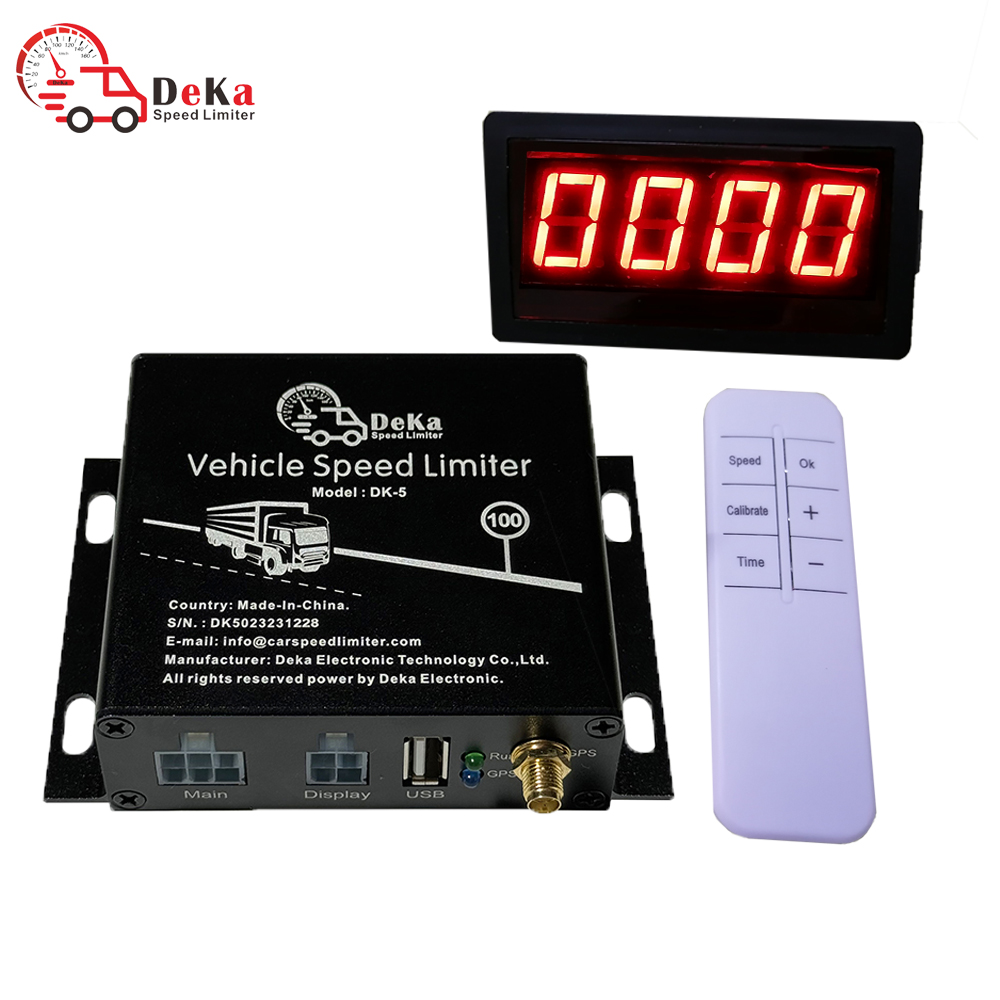
| Product Name |
Vehicle Speed Limiter |
| Speed Range |
10km/h to 120km/h |
|
Speed limit deviation
|
± 1km/h |
|
Operating voltage range
|
|
|
Low temperature resistance
|
|
|
Temperature resistance
|
|
|
Frequency (MHz)
|
|
| Brand |
Deka Speed Limiter |
| Warranty |
1 Year |
| Application for |
Public Service Vehicles,Truck,Bus etc. |


